How the Emotional Age Test Differs From a General Mental Age Test
While our flagship Mental Age Test blends lifestyle habits, playfulness, financial foresight, and social tempo into an overall outlook score, this emotional age test focuses strictly on how you regulate feelings and relate to other people under friction.
Two people can both score 35 on a general lifestyle quiz yet react completely differently when someone cancels at the last minute, criticizes their work, or leaves an important text unanswered for six hours. By isolating interpersonal and stress-response situations, the emotional age test highlights the relational habits that shape everyday trust, communication, and calm.
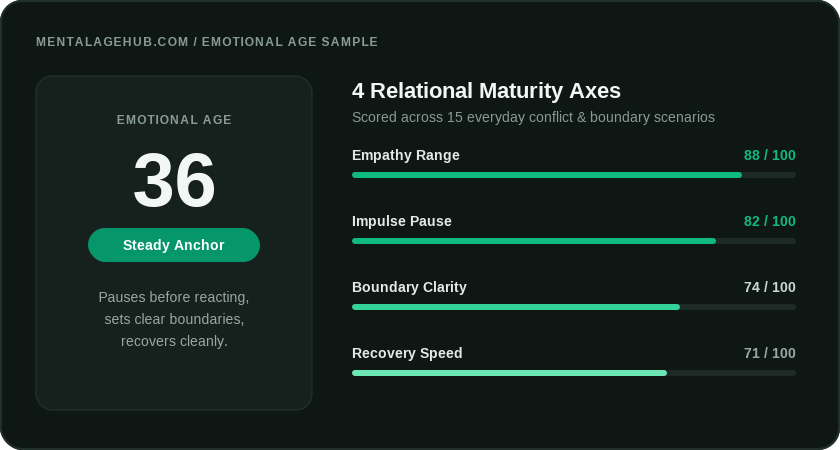
All 15 scenarios run locally in your browser and score four focused axes:
- Impulse Pause: Measures the gap between an emotional trigger (an unfair tone, a rude stranger, a late-night email) and your visible reaction.
- Boundary Clarity: Tracks whether you decline favors, protect downtime, and state personal needs kindly and directly instead of hinting or harboring quiet resentment.
- Empathy Range: Reflects how easily you hold space for someone else's perspective, celebrate a friend's success, or listen without jumping straight into debate.
- Recovery Speed: Captures how cleanly you repair awkward slips, deliver genuine apologies without excuses, and bounce back when a cherished plan falls through.
Interpreting Your Emotional Age Stage
Your final result places your answers between 16 and 65 and pairs your numerical score with one of four relational maturity stages, plus a concrete reflection prompt anchored to your lowest-scoring axis.
| Emotional Age Range | Stage Name | Core Relational Pattern |
|---|---|---|
| 16-24 | Reactive Spark | High emotional intensity and fast reactions; benefits most from adding a brief cooling-off pause. |
| 25-34 | Adaptive Learner | Strong self-awareness after conflict; actively turning hindsight into calmer real-time boundaries. |
| 35-48 | Steady Anchor | Composed listener who balances honest boundaries with genuine warmth and quick repair. |
| 49-65 | Composed Mentor | Grounded perspective that separates personal worth from outside friction or passing moods. |
Emotional maturity is not fixed by birth year, and it often fluctuates with sleep, burnout, and major life transitions. Someone in their early twenties who has practiced direct communication can score as a Steady Anchor, while an exhausted forty-year-old under intense deadline pressure may temporarily lean toward faster reactive impulses.
Honest Context: Like every quiz on MentalAgeHub, this emotional age test is designed for self-reflection and entertainment only. It is not a psychological diagnosis, therapy tool, or clinical emotional intelligence exam.
If you have not taken our broader five-axis assessment yet, compare your relational score against your overall lifestyle result on the main Mental Age Test, or learn why chronological age and psychological maturity frequently diverge in our Mental Age vs. Chronological Age guide.